The Largest Online Community for Contact Centre Professionals


The Largest Online Community for Contact Centre Professionals
 Close
Close



Published On: 6th Aug 2026 08:00
With more employees working from home than ever before, contact centre leaders have had to rethink how they maintain business as usual and continue driving toward organizational goals.
In this new environment, gamification has emerged as a critical way of ensuring employee productivity and engagement.
Contact centre employees who made an overnight transition to working from home faced a number of roadblocks to their usual ways of working.
New distractions, such as children, pets and other family members who are in the home during the workday, vie for employees’ attention. And while in the past employees might have simply walked over to a co-worker’s or supervisor’s desk to ask a question, share an update or ask how they’re doing, those interactions aren’t possible any more.
There’s no opportunity for impromptu watercooler conversations or catch-up time over a cup of coffee. Every communication and meeting must be scheduled ahead of time, and when communication becomes difficult, people tend to avoid it.
That can leave workers disconnected from their peers and the organization’s goals and vision; according to a study from Workplace by Facebook, only 14% of remote employees feel connected to headquarters and the leadership team.
Workers who feel disconnected from their workplace are typically less engaged and therefore less productive. Organizations with a high level of engagement report 22% higher productivity in addition to lower absenteeism and turnover, Gallup has found.
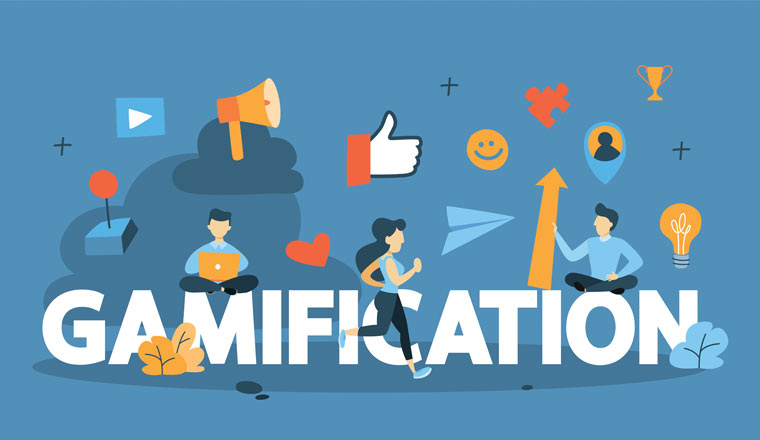
Gamification is the application of game-design elements and game principles in non-game contexts. It’s similar to when you wear a Fitbit or Apple Watch; gathering those points or receiving a digital reward when meeting a step goal or other activity target is motivating.
In the contact centre, gamification involves using activities and processes with game elements, such as pursuits, quests, and other gaming exercises, with usually multiple levels and potentially some collaboration elements, that can come with points and rewards, to help employees solve problems or increase their capabilities.
Studies have found that gamification drives intrinsic motivation and feelings of autonomy and competency among employees. In addition, 83% of employees surveyed in a recent report said that gamification makes them feel more motivated, and 61% who had not received gamified training said they feel bored and unproductive.
Gamification drives employee productivity and engagement in four key ways:
Each of these benefits contributes to more productive employees and adds substantial value to the contact centre’s bottom line. A productive and engaged employee can contribute as much as $9,880 in additional value annually over a less productive, less engaged employee.
Lack of performance and engagement also contributes to the fact that, on average, most contact centres face 40% turnover. In a contact centre with 2,000 employees, for example, reduced engagement and productivity could cost as much as $3.2 million each year.
By adding gamification to a contact centre’s repertoire of training and engagement programmes, contact centres can achieve higher levels of productivity and empower remote employees to engage with work in a fun and rewarding way.

The Latest Customer Contact Research, Reports and White Papers straight to your inbox!
Get the latest insights from Call Centre Helper by signing up for our email content.
Close