The Largest Online Community for Contact Centre Professionals


The Largest Online Community for Contact Centre Professionals
 Close
Close



Published On: 6th Aug 2026 06:12
This article contains the extracted Cloud Chapter of the 2020 survey report ‘What Contact Centres Are Doing Right Now’, which was sponsored by Vonage.
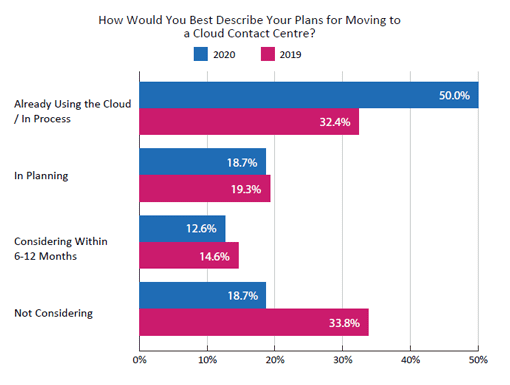
Half of all contact centres (50.0%) have now moved to the cloud, a sharp increase from the figure of 32.4% that was recorded in our previous survey in 2019.
The switch to remote working is no doubt the catalyst behind this sharp rise not only in cloud installations but also in cloud technology.
This growth in interest can be seen in the statistic that last year 32.0% of contact centres said that they were “not considering” moving to the cloud. This figure has almost halved in less than 12 months, all the way down to 18.7%.
However, considering that it is much easier to set up remote working in the cloud, many will be surprised that only 50.0% of contact centres have migrated to the cloud.
While data security risks (33.3%) seem to be the industry’s biggest concern about moving to the cloud, there are a number of other factors that worry our industry professionals.
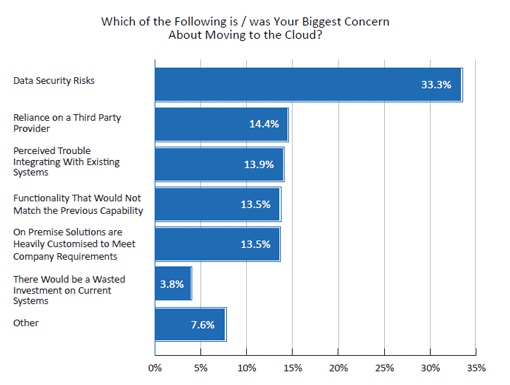
Common other factors include being reliant on a third-party provider (14.4%), perceived trouble integrating with existing systems (13.9%), functionality concerns (13.5%) and having to let go of heavily customized on-premise solutions (13.5%).
The major concerns have been covered in the chart above, but there were others that 7.6% of our survey participants told us about. These included:
Almost three-quarters of contact centre professionals (74.7%) believe that cloud better complements improved customer experience than on-premise systems.
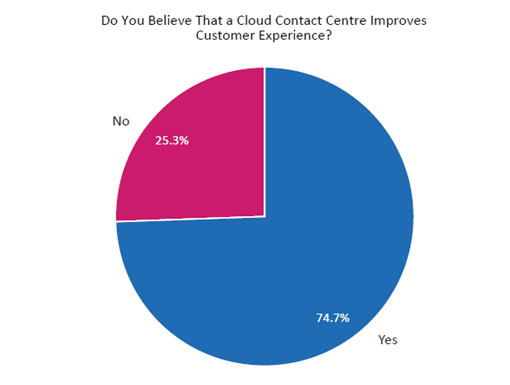
However, with cloud being such a quickly growing technology, many might be surprised that 25.3% of respondents did not believe that the technology could enhance customer experience.
Perhaps this is because contact centres rushed to the cloud in response to the COVID-19 outbreak and not yet had the chance to utilize its full capabilities.
In time, we would expect the 74.7% figure to increase as the technology continues to develop and contact centres get to grips with its functionality, easy upgrades and cost-effectiveness.
Not only does the installation and configuration of on-premise solutions take a lot of time but trying to upgrade is no walk in the park either.
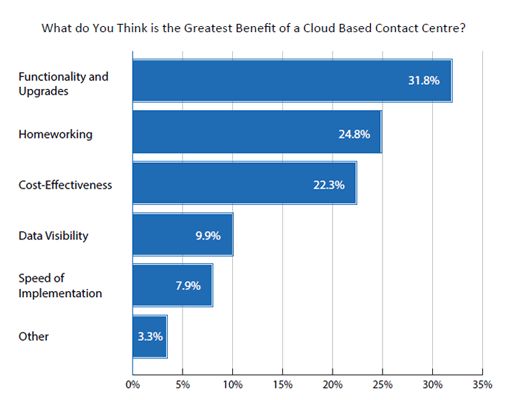
Doing away with this never-ending struggle is therefore unsurprisingly seen as the biggest benefit of cloud technology – with functionality and upgrades (31.8%) taking the top spot in our poll.
This even comes above homeworking (24.8%), which has been the theme of the year, and – within that – cloud’s ability to offer multi-site capacity and hybrid working for the future.
Some other key benefits noted by our readers included: cost-effectiveness (22.3%), data visibility (9.9%) and speed of implementation (7.9%).
Little more than one in every nine contact centres have confirmed that they will work without remote agents after the pandemic.
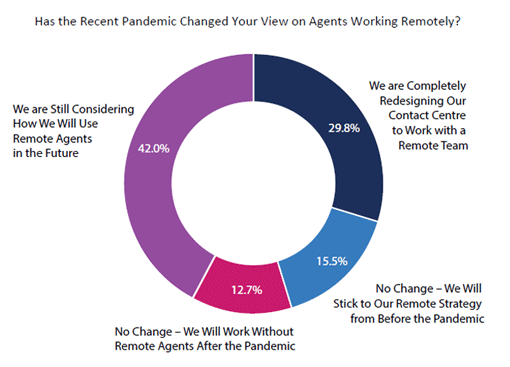
While 42.0% of contact centres have not yet confirmed their plans for how they will use remote agents in the future, these statistics will be very encouraging for homeworking’s many enthusiasts.
In addition to that, 29.8% of contact centres are currently redesigning their future plans to ensure that their operation works with remote agents – highlighting that they have had some success in their transition to remote working.
A further 15.5%, who were already ahead of the game, will stick to the remote strategy that they had in place before the pandemic.
Follow this link to view the full Call Centre Helper survey report ‘What Contact Centres Are Doing Right Now‘.
Alternatively if you are interested in a specific chapter read one of these extracts next:
This survey was done in partnership with Business Systems, Jacada, Voci Technologies and Vonage.
To download the full copies of our ‘What Contact Centres Are Doing Right Now’ survey reports follow the links below:
You can also download the full copies of our ‘Is Your Contact Centre Delivering Exceptional Customer Service?’ survey reports by following the links below:
Reviewed by: Jo Robinson

The Latest Customer Contact Research, Reports and White Papers straight to your inbox!
Get the latest insights from Call Centre Helper by signing up for our email content.
Close