The Largest Online Community for Contact Centre Professionals


The Largest Online Community for Contact Centre Professionals
 Close
Close



Published On: 6th Aug 2026 11:00
Aksheeta Tyagi at Sprinklr looks into how digital twins can help you connect more deeply with your customers and compel you to rethink your take on CX.
Fancy a world where your customer experience is not just enough, but beyond?
The window to it is through your customer’s mind.
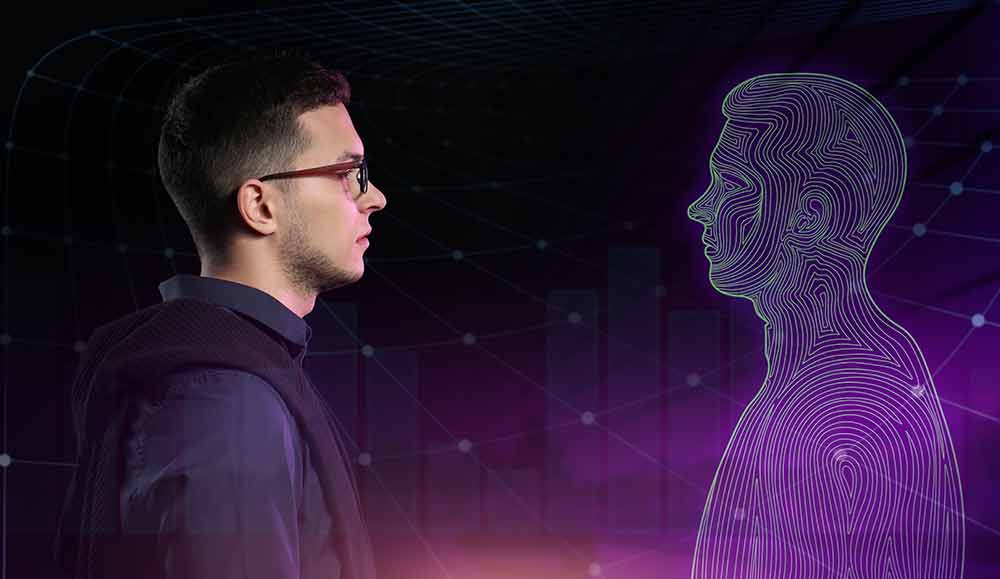
Imagine being able to create a virtual version of each customer, a digital twin that mirrors their every move, preference and decision.
This digital twin could live in a detailed virtual world, replicating their home, workplace and everyday environments. It interacts with your products and services, providing you with a wealth of information about their behaviors and needs.
Think of the power this gives you.
You could anticipate what your customers want before they even realize it themselves. You could test and try your offerings, messaging and hypotheses on the digital twin of your customer before going live.
From proactive customer service to customer experience management – everything will be risk-free and data-driven, rooted in customer-centricity.
Digital twins in customer experience are virtual replicas of your customers, reflecting their behaviours, preferences and interactions.
Having a digital version of each customer allows you to test them under varied digital scenarios, revealing behaviours and customer insights that were inaccessible to you earlier.
With a digital twin of your customer, you can test and optimize your strategies in a virtual environment before applying them in real life.
Let’s understand the concept with a relatable example.
Reducing shopping cart abandonment is a common goal many online retailers strive for. Now, using a digital twin of a customer’s journey, you can visually map the entire process from browsing to checkout.
The digital twin can help identify the exact point where the customer drops off, helping you with root cause analysis of the problem and possible fixes.
If the complex checkout process frazzles the twin, you can work on simplifying that and hopefully bring down your drop-off rate.
By making such adjustments, the company can see how customers respond and fine-tune the experience before rolling it out live.
You can also test various retargeting ad variants to see what catches the customer’s eye and brings them back to your store.
This way, you create a smoother, more satisfying shopping journey and effective ad campaigns that keep customers coming back.
Did you know?
You can also create digital twins for your brand, teams and employees that can power conversations, take decisions, curate workflows and execute tasks at scale with unmatched speed, accuracy and efficiency.
Before you jump into a project head long, running trials is always a good idea. And that’s exactly what digital twins help you figure out. Here are the benefits of using digital twins to elevate your CX.
Customers today expect experiences that feel tailor-made just for them. In fact, over seven in 10 customers choose, recommend or pay more for brands that weave personalized experiences.
Digital twins shine in this area by creating a virtual model of each customer, allowing you to understand their unique behaviors and preferences deeply.
When you imbibe what’s it like to be your customer, you can personalize every interaction with them to a much higher degree.
For example, imagine an online clothing retailer.
A digital twin of a customer would mirror a real customer’s browsing history and even social media activity to reach outfits they might like.
If a customer frequently buys athletic wear, the digital twin can recommend the latest sports gear, or if they prefer a particular brand, it can highlight new arrivals from that brand.
Digital twins help you develop better products by providing a dynamic, real-time simulation of how customers use and interact with products.
Instead of waiting for post-launch feedback, you can observe and analyze customer behavior during the development phase itself. This means you can identify potential usability issues and opportunities for improvement before the product hits the market.
Introducing HereAndNow, a watch brand I created to help put this into perspective.
The brand has varied cohorts of audiences – athletes, tech enthusiasts and casual wearers. Now, to understand how each of them would interact with the device, HereAndNow creates digital twins of all these customer personas.
These simulations can reveal insights, such as which features are most popular, where users encounter friction or how battery life holds up under different usage patterns.
For instance, if athletes frequently use the GPS feature, the digital twin might reveal a need to optimize battery life during intense tracking sessions.
Meanwhile, tech enthusiasts might focus on customizing watch faces, indicating a demand for a more intuitive personalization interface.
This detailed insight helps developers refine the product, ensuring it meets specific user needs and delivers a top-notch experience right out of the box.
If you like jargon, then this means predictive troubleshooting. Digital twins can even empower you with an ability to nip potential problems in the bud before your customers even run into them.
So now, Kiera, your customer, is a proud owner of a smart refrigerator, thrilled with its cutting-edge features.
Her smart fridge’s digital twin monitors real-time data from various sensors embedded in the appliance. These sensors track temperature, humidity, compressor performance and even the frequency of door openings.
Nice to have a tiny fridge guru inside, always vigilant, isn’t it?
One day, it notices the temperature rising and the digital twin begins to play detective – analyzing data and comparing it to historical patterns. It finds the compressor is overworking due to dust buildup on the condenser coils.
Before Kiera even knows there’s an issue, the digital twin sends a notification to her smartphone and your service centre. The alert suggests checking the condenser coils for dust.
Kiera follows the advice and sure enough, finds a dusty mess. A quick cleaning later and her fridge is back to perfect cooling.
This predictive troubleshooting not only saves her fridge from a complete shutdown but also spares both of you a costly service visit. Kiera’s smart fridge stays efficient, her groceries remain fresh – and who knows? She might even give you a shoutout on her socials!
While these benefits are surely exciting, there are a few challenges you might run into.
Here are a few questions you need to ask yourself before you implement digital twins.
Handling vast amounts of sensitive customer data with digital twins raises significant concerns about data security and privacy. Here are some solutions:
Developing digital twins requires substantial investment in technology, skilled personnel and infrastructure. To optimize these development costs:
Adopting digital twins means big changes in business processes and culture, which can face pushback from employees.
While the application of digital twins largely depends on your industry and your specific use cases, here is your overarching go-to guide on deploying digital twins in customer experience.
Collect data from all relevant sources such as interactions on all customer service channels, transaction histories, social media and IoT devices. Ensure data from various platforms and systems is unified into a single, comprehensive dataset.
Pro Tip: For higher customizability, choose a vendor that uses advanced Retrieval-Augmented Generation (RAG) techniques to create digital twins.
It should allow you to train your digital twin on website URLs, assets in the Digital Asset Manager (DAM), Knowledge Base and FAQs to ensure responses and actions are contextualized to your brand.
Clean the collected data to remove any inconsistencies, duplicates or errors. Enrich the data by adding context and enhancing it with external data sources for a more comprehensive view.
Can’t let accuracy slip by!
The data you use to build your digital twin needs to be as reliable as you can make it. Here are a couple of best practices to give you a head-start:
Create detailed digital profiles of your customers using the cleaned and enriched data. This includes demographic information, behavior patterns, preferences and past interactions.#
Knowing your customer inside out is mostly a myth, unless…
…you use a Unified Customer Experience Management (Unified-CXM) platform. To create the finest digital versions of your customers, you need to know them like the back of your hand.
A Unified-CXM tool lets you do that since it helps you record, store and access every single interaction that takes place between you and your customer online in one cohesive space.
Whether it’s a tweet directed at you or a WhatsApp text inquiring about your new campaign, you can only create water-tight, consolidated profiles of your customers if you have the reach and ease of meeting them where they are.
Develop predictive models using ML algorithms to forecast how customers behave, what they prefer and potential issues they run into. These models are essentially the brains behind your digital twins, helping you stay one step ahead of your customers.
You could start by choosing the right algorithms for what you want to achieve.
Regression models work great for predicting things like customer lifetime value, while classification algorithms help identify customer segments or flag churn risks.
Create interactive and intuitive visualizations of the digital twins to change complex data and predictive models into understandable, actionable insights. Intuitive visualization helps stakeholders easily interpret and interact with the data to create effective digital twins.
Test the digital twins in various scenarios to ensure they accurately reflect real-world behaviors and conditions. Use A/B testing to compare different strategies and outcomes.
Now, I will discuss the utility of digital twins in the CX world and how they work throughout the journey to boost CX for specific personas.
Before Adrian arrives, the digital twin reviews his past stays. Knowing he prefers a health-conscious lifestyle, the room is stocked with healthy snacks and drinks. The mini bar is customized to exclude alcohol and includes a selection of premium mocktails.
Adrian opts for digital check-in using the hotel’s app, which his digital twin has streamlined for efficiency, recognizing his preference for quick, hassle-free processes.
Hyper-personalization is not an overstatement of what Adrian experiences during his stay. The thoughtful touches, like a mocktail menu and personalized spa sessions, make Adrian feel uniquely valued. He’s more likely to return to the hotel and recommend it to others.
The digital twin analyzes Sarah’s buying patterns and identifies items she frequently returns. If she often returns shoes due to size issues, the twin suggests more accurate sizing guides or recommends brands that fit her well.
When Sarah makes a purchase, the digital twin assesses the likelihood of a return. For items flagged as high-risk for returns, the twin prompts the retailer to include a pre-paid return label and streamline the return.
If Sarah decides to return an item, the digital twin guides her through a hassle-free process, providing clear instructions and instant updates. It also suggests alternative products based on her preferences.
Sarah enjoys an effortless shopping experience with easy returns, making her more confident in her purchases.
The digital twin profiles typical scammer behaviors by analyzing previous fraud cases. It monitors Linda’s account for any unusual activity, such as multiple small transactions designed to avoid detection or sudden large transfers.
If the digital twin detects suspicious activity, it immediately alerts Linda and the bank’s security team. For instance, if an unauthorized device attempts to access her account, Linda receives a prompt notification to verify or block the activity.
The digital twin enhances security by integrating with multi-factor authentication systems. When Linda logs in, the twin ensures additional verification steps are in place if the login attempt deviates from her usual patterns.
Here are a few future trends and the evolving role of digital twins in customer experience:
Digital twins mimic your customers’ behaviors and preferences, letting you tailor your products, services and interactions to what they really want, making everything feel more personal and spot-on.
The ethical considerations associated with the use of digital twins in CX are:
Keep digital twins updated in real-time or at least regularly, like daily or weekly, to make sure you’re always reflecting the latest customer behaviors and preferences.
Digital twins use AI and machine learning to analyze and predict customer behavior, while IoT devices provide real-time data streams, together creating a dynamic, responsive and personalized customer experience ecosystem.

The Latest Customer Contact Research, Reports and White Papers straight to your inbox!
Get the latest insights from Call Centre Helper by signing up for our email content.
Close