
The Largest Online Community for Contact Centre Professionals


The Largest Online Community for Contact Centre Professionals
 Close
Close




Published On: 6th Aug 2026 08:00
It can be challenging to figure out the fastest and most effective way to get your team members up to speed on all the critical areas, call handling, systems and processes, and product knowledge, can’t it?
One way to tackle this challenge is by conducting a skills audit.
Marc Carriere shares tips on how team leaders can use skills audits to identify gaps and create targeted coaching plans that improve staff performance.
One of the biggest challenges for team leaders is knowing where to start, and how to develop expertise in areas where they themselves may not be strong.
This is where a skills audit comes in. A skills audit covers all the call handling skills of your coachable call structure, as well as product, systems or admin skills they need to be top performers.
Conducting a skills audit should be done quarterly. This not only highlights the training and coaching priorities your team needs to consistently hit monthly targets and KPIs but also helps you spot trends.
For example, if multiple team members struggle with the same skill, it’s easier to decide whether group training or one-on
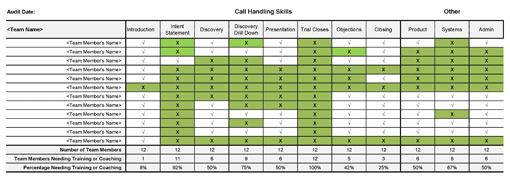
When you create your skills audit form, you want to break all the skills/areas you’ll audit into two areas – ‘Call Handling Skills’ and an ‘Other’ section that identifies Product, Systems and Administration skills, as shown in the image below.
It might only take a little feedback to get your team member back on track, which you can do quickly, or you may need to conduct some on-the-job coaching or have them attend some specialized training if it involves product knowledge or working with your systems or processes.
And if a few of your team members need the same type of training or coaching, you’ll be able to quickly see that by looking at the ‘Team Members Needing Training’, ‘Coaching and the Percentage Needing Training’ or ‘Coaching’ rows at the bottom of the form and decide how to handle these needs with either one-on-one or group coaching or training.
Team leaders should do a skills audit every quarter and include it in any reviews and feedback sessions they have with their team members.
When new team members come on board the leader should wait a month to give the team member time to settle in before conducting a skills audit, unless they’ve been moved over from another team, in which case, be sure to get the last audit from their previous team leader.
Team leaders should also bring a copy of their audits to any performance reviews they have with their manager to discuss and demonstrate they’re on top of their team’s coaching needs and discuss any coaching or training plans to fill the gaps.
You’ll find that if you do a skills audit first, it will make developing a coaching plan so much easier.
The best thing about developing a coaching plan after conducting a skills audit is the confidence you’ll have knowing you’re taking a systematic approach that covers any skill deficiencies team members have and that you’ve got a plan to get the skills they need as soon as possible. They go together like peas and carrots!
Just imagine how relieved team members will be knowing you’ve got their best interests at heart with a coaching plan to turn them into one of the better performers.
Not to mention, your manager is going to be pretty impressed when you show them what you’re doing to develop all your team members, right?
Here’s an example of a coaching plan template I created for one on my clients for their team leaders to use for their teams.
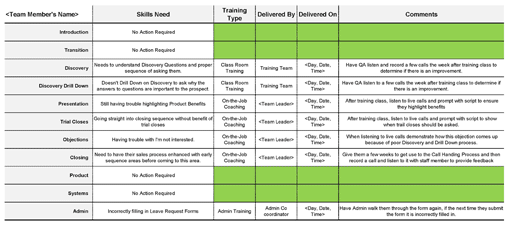
As you can see, here we have a column for each area of the coaching plan, and just under the team member’s name is where you’d put each of the skills/areas of your coachable call structure, and below that are rows for other areas like Product, Systems and Administration.
Depending on the skills/area, you might decide that classroom room training might be the best way to handle this area, particularly if you have a few team members that need help with the same thing, or you may also find that other team leaders have people who need the same help, so it would be more efficient to have a group session on this area.
Obviously, if you’re putting someone else down to conduct the class, you’ll need to speak with them about this first.
A coaching plan can be created at any time; however, you should definitely develop one after you’ve conducted a skills audit on each of your team members at least every quarter, and include the plan, together with the skills audit, in any reviews and feedback sessions with team members.

And, as with your skills audit, bring a copy of your coaching plan to any performance reviews you have with your manager, so they know you’re on top of your team’s coaching needs and discuss any coaching or training plans to fill the gaps.
Written by: Marc Carriere from Marketing Tactics.
For more information on how to develop staff and team leaders, read our articles:
Reviewed by: Robyn Coppell

The Latest Customer Contact Research, Reports and White Papers straight to your inbox!
Get the latest insights from Call Centre Helper by signing up for our email content.
Close