The Largest Online Community for Contact Centre Professionals


The Largest Online Community for Contact Centre Professionals
 Close
Close



Published On: 6th Aug 2026 11:00
Do You Need 100% Accurate Transcripts For AI Auto-QA Or AI Insights To Be Reliable?
The answer is no. AI-based Auto QA or CX Analytics (AI Insights) do not require 100% accurate transcripts to be reliable.
Modern AI derives meaning from context, patterns, and prior training-not from perfect word-for-word input-so small transcription errors don’t materially affect the quality of insights or trend detection.
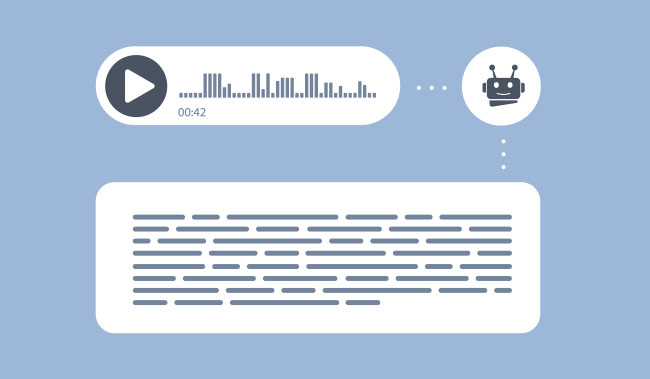
John Ortiz at MiaRec explains why AI-driven Auto QA and CX analytics can deliver reliable insights without relying on perfectly accurate call transcripts.
| Concept | Old Software / Data Model (Deterministic) | AI / LLM Model (Probabilistic) |
|---|---|---|
| How input in processed | Requires exact inputs; follows strict rules. One wrong value breaks the logic. | Interprets patterns using context. Imperfect words are just small noise in a larger signal. |
| Tolerance for errors | Very low. Accuracy depends on every individual data point being correct. | High. Works reliably with 90-95% transcript accuracy because insight comes from trends, not single words. |
| How insight is produced | Based on small, perfectly clean samples (e.g., 2-5 manual evaluations) | Based on large-scale analysis across thousands of calls, where noise is cancelled out and patterns dominate. |
Recently, walking a potential customer through the amazing data uncovered during a free call analysis conducted for them. MiaRec analysed 500 of their calls and uncovered untapped revenue opportunities, churn drivers, and more.
It was great… until it wasn’t. The mood visibly shifted when they spotted a slight inconsistency in the transcript. They sat back in their seats and crossed their arms.
Within that tiny moment, they had lost complete trust in the results because they held a flawed assumption. They believed that you must have 100% accurate transcripts to get highly accurate results from the AI.
Their fears are understandable. For the last few decades, Companies have worked with spreadsheets, databases, and computers programmed to function in a specific way.
Garbage in, garbage out, right? If every cell in your Excel sheet isn’t correct, your final result will be wrong. So it feels intuitive that AI needs perfect input, too.
The problem is that the mental model is based on classic computer programming, not on how modern AI actually works. And if we keep applying the “old” model to AI, we’ll underestimate what’s possible and overestimate the risks.
This article walks through, step by step:
Classic software, such as spreadsheets, databases, or computer programs, is based on deterministic algorithms, meaning it will always produce the same output for a given input.
In that world, single errors can break everything:
This is where “garbage in, garbage out” comes from. The quality of your inputs primarily determines the quality of your results. The system isn’t interpreting anything. It’s just executing rules on whatever you give it.
So we internalized a simple belief: If the input isn’t 100% accurate, you cannot trust the output. That belief is reasonable for deterministic code and structured data.
But that is just not how AI works.
Modern AI, especially Large Language Models (LLMs), doesn’t follow those same rules. It has been trained on hundreds of millions of data points and learns patterns statistically from massive amounts of text and speech. At a very high level:
Two key differences from classic programming:
Think of it this way:
Classic software: One wrong number can break the calculation.
AI: One wrong word is just a slightly noisy data point in a large pattern.
You can close the article (or a sidebar) with a simple script that leaders can reuse:
That’s the mindset shift this article is really about: moving from a brittle, 100%-or-bust view of data quality to a statistical, trend-based understanding that matches how AI actually works.
For context, in legal situations where lives and liberty can be on the line, the expectation for professional human transcribers isn’t 100%.
In Pennsylvania, court reporters must hit 95% accuracy to be certified. And in speech research, “human-level” transcription is often approximated as ~4% word error rate (WER)—that’s still about 4 mistakes per 100 words.
And that’s okay, because:
Modern AI systems do something very similar, just with statistics instead of neurons.
In speech-to-text systems, transcription quality is typically measured with Word Error Rate (WER), how many words are substituted, deleted, or inserted compared to a reference transcript. Recent benchmarks, according to Vatis Tech and FutureBeeAI, suggest:
Call center audio is rarely pristine: agents talk fast, customers mumble, and there’s hold music in addition to background noise, accents, and line issues.
So a realistic target is often in the 90–95% accuracy range, not 100%.
Also, keep in mind that your AI isn’t trying to prove something beyond a reasonable doubt. It’s trying to answer questions like:
Those are aggregate questions, and that’s where statistics and the law of large numbers come in.
When an LLM reads an imperfect transcript, a few things happen that make it surprisingly robust:
So a transcript that looks “messy” to a human reviewer will still make complete sense to an AI.
Let’s mention something else here. Beyond the way AI infers meaning from context and prior learning, there’s a second stabilizing effect worth noting:
When you analyse thousands of calls, random transcription errors tend to cancel out rather than distort the overall insight, a benefit of large numbers, not a requirement for accuracy.
The law of large numbers in statistics says that as you observe more and more samples, the average result converges to the actual underlying value.
In other words, if your errors are mostly random and you look at enough data, the noise tends to cancel out, and the signal remains.
This post has been re-published by kind permission of MiaRec - view the original article.

MiaRec is a global provider of Conversation Intelligence and Auto QA solutions, helping contact centers save time and cost through AI-based automation and customer-driven business intelligence.
Find out more about MiaRecReviewed by: Jo Robinson

The Latest Customer Contact Research, Reports and White Papers straight to your inbox!
Get the latest insights from Call Centre Helper by signing up for our email content.
Close