The Largest Online Community for Contact Centre Professionals


The Largest Online Community for Contact Centre Professionals
 Close
Close



Published On: 5th Aug 2026 08:00
Can a chatbot really deliver the same service experience as a human agent?
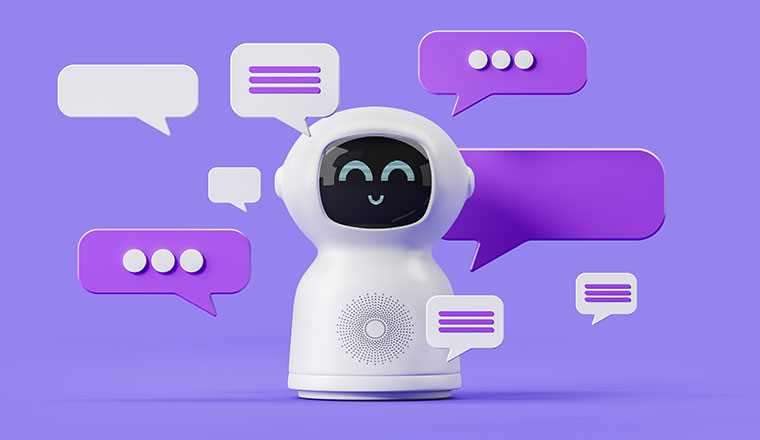
In this article, we explore chatbots in the contact centre, explaining what they are, how they work, the types available, and the roles they play across industries.
Chatbots have rapidly gained popularity due to their ability to provide instant, 24/7 assistance, making them an invaluable tool for businesses and individuals alike.
Their capacity to engage in natural and human-like conversations, addressing queries and concerns in real time, enhances customer experiences and streamlines interactions. And technology continues to advance, leading to more sophisticated and context-aware chatbots.
The data gathered from our 2023 survey “What Contact Centres Are Doing Right Now?” shows a notable increase in chatbot usage in contact centres, at 38% of readers.
Furthermore, there’s been a significant surge in demand, as evidenced by 38.4% of contact centres expressing interest in incorporating chatbots into their business. This marks a noteworthy increase compared to the 35.6% figure recorded in 2022.
These findings underscore the growing and dependable role of chatbots as a solution. Leaders in contact centre management are increasingly realizing the benefits of chatbot integration and acknowledging the resolution of earlier technological issues over time.
As a result, they now recognize the proficiency of chatbots in handling simple enquiries, thereby enabling human agents to focus on more complex customer issues.
For more insights from our 2023 survey, read our article: The Top Contact Centre Technologies of 2023
A chatbot is essentially a computer program which allows communication between customers or website visitors in cases when a human agent is unavailable.it may even replace the initial role of the agent entirely.
Chatbots can engage in voice interactions, but more commonly they employ text-based conversations (or even a blend of both methods).
Whilst initially chatbots were mainly deployed by large multinational companies, designed to offer 24/7 support, they are now so common for businesses that many solutions include a host of different integrations for custom chatbots on your website or other digital channels.
Chatbots are traditionally employed to help customers with simple tasks. They can answer questions, give information, or assist customers with tasks like delivery tracking.
We recently released a video on this subject, which can be seen below:
What types of algorithms do they use? Whilst there are many different algorithms that can be used for chatbots, we’ve broken down the general process into three steps:
| Speech Recognition | Natural Language Processing | Dialogue Management & Machine Learning |
|---|---|---|
| Understand natural language speech and convert into text | Identify intent and extract key information | Create the conversation and drive questions and responses. |
We recently released a video about chatbot algorithms that you can watch below:
Chatbots are employed in many different ways. Customer support is the most common, aiding with enquiries and e-commerce purchases.
Healthcare uses chatbots for basic medical advice and appointment scheduling. Within businesses, chatbots streamline tasks like data retrieval. They also serve as virtual tutors in education.
Chatbots come in a diverse array of types, each designed to fulfil a specific roles and cater to various user needs.
We recently asked our panel of chatbot experts about how they would measure the performance of a chatbot.
Knowing how well your chatbot is performing and being able to judge the quality of its customer interactions is vitally important.
For more information on chatbots and how they are used in the contact centre, read these articles next:
Reviewed by: Jonty Pearce
The Latest Customer Contact Research, Reports and White Papers straight to your inbox!
Get the latest insights from Call Centre Helper by signing up for our email content.
Close


4th August 2026
4th August 2026