The Largest Online Community for Contact Centre Professionals


The Largest Online Community for Contact Centre Professionals
 Close
Close


Published On: 5th Aug 2026 09:30
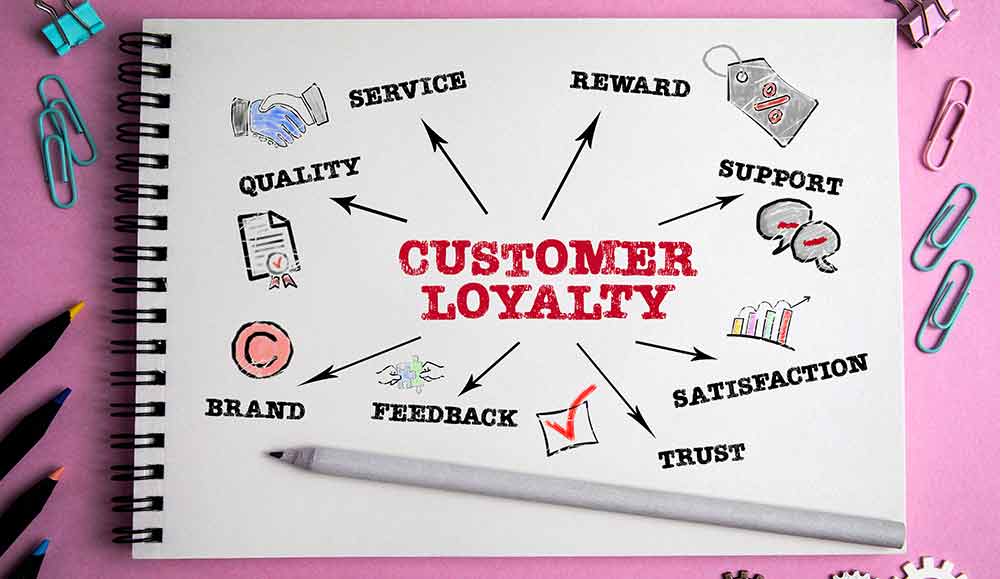
Capacity explore the most direct causes of customer loyalty.
Research shows that the most direct cause of customer loyalty is having a low-effort customer experience combined with a good product or service.
As a contact center leader, you play a crucial role in the first part of that equation. It’s up to you and your teams to consistently resolve customer issues with minimal effort required by the customer.
There’s no top-secret tool, no gadget, and no magic phrase that makes your customers loyal for life. While we may focus on “net promoters” and invest in programs that let customers earn rewards or track customer loyalty, the truth is, loyalty is much simpler.
As we’ve identified in previous research, customer loyalty can be boiled down to a four-cell framework. On one side, we have the effort customers must exert to do business with your company.
On the bottom, we have the “stickiness” of your product/brand, which references how difficult it will be for a customer to switch from using your brand to another.
As you can see, there are lots of reasons for customer loyalty, and not all of them are good. Let’s break down each of these four cells and try to identify the most direct cause of customer loyalty in these situations.
In the lower left-side corner, we have the least-desirable category of the four cells, otherwise known as the “Chronic Suck” category.
This high-effort experience results in a product or service that is sub-par, and does not meet customer needs and expectations.
This is like when you go to the coffee shop, wait twenty minutes for your order, and it ends up wrong anyway. Then you find out your credit card was charged the wrong amount.
Everything about this experience is negative! We all know a business that’s just like this, and you wonder how they’ve stuck around all this time. These types of experiences lead to bad word of mouth, and low customer engagement.
The takeaway: These experiences do NOT create loyalty. Don’t be like this. In fact, when new companies implement Capacity, one of the first things we recommend is to work to eliminate experiences in this category as we begin measuring customer loyalty.
On the right side of the high-effort row, we have the Bearable category. These experiences are the ones where you can forgive a high-effort customer experience for the sake of a great product, or it’s so much effort to switch products that they feel compelled to stay even if customer service isn’t great.
This isn’t ideal. Perhaps you have a great product—the best coffee in town, for example—but your staff is unhelpful and your store hours inconvenient. Your customers make do, but your customer satisfaction is never where it could be.
Alternatively, maybe you run a bank and the customer has been banking with you their entire life, and it’s just too difficult to switch.
The takeaway: These experiences create loyalty indirectly. A bearable experience has some powerful negatives, but ultimately it’s too hard to switch or your customers love your product enough to suffer through negative experiences.
The upper left, Forgivable, represents those experiences that are just too easy to pass up. This could be heading to the corner store instead of the nice grocery store that’s twenty minutes away, or the gas station right next to your place of work.
It might be more expensive to shop there, but it’s easy and convenient to do so, so you keep returning. Customer retention is, in this situation, achieved through ease of experience.
The takeaway: A low-effort experience sometimes encourages customers to become loyal, even when the product or service is lacking in some way.
Finally, let’s discuss the holy grail of customer loyalty: low effort and high product stickiness. We call this “The Promised Land.”
These experiences are the ones where it’s super easy to get what you need, and it’s exactly what you want when it’s in your hand.
This happens in situations like this: You find the perfect pair of jeans online that cost the right amount of money, place an order—and they arrive in two days and are exactly what you wanted. If those jeans don’t fit? Returning them is a snap.
That’s the kind of situation where a low-effort experience and a great product combine to create powerful customer loyalty.
The takeaway: We’re all aiming for The Promised Land. This is the category in which you’re most likely to have customers not just stick around, but to spend more and recommend you to others.
In short, yes. There are two broad types of loyalty: good and bad.
Bad loyalty is risky. Your customers may be sticking with you now because it feels like too much work to switch (or because your product or service is convenient), but they’re likely to jump ship if they find an alternative that makes switching easy and offers a better experience.
Good loyalty, on the other hand, helps your brand grow your average customer lifetime value, win new business through word-of-mouth, and increase cross-sell and upsells.
Businesses can improve customer loyalty with a unified strategy that combines AI and human support across channels.
Call center automation tools can help improve customer service by automating pain points within experiences, like authentication, or providing agents with full context, so customers don’t have to repeat themselves.
This post has been re-published by kind permission of Capacity - view the original article.
Capacity is a unified CX Automation Platform built to help contact centers reduce costs, improve CSAT, and support both virtual and human agents with AI-powered efficiency.
Find out more about CapacityReviewed by: Jo Robinson

The Latest Customer Contact Research, Reports and White Papers straight to your inbox!
Get the latest insights from Call Centre Helper by signing up for our email content.
Close